
It has been an uneasy quiet after India’s surgical strike at Balakot terrorist camps and release of Abhinandan by Pakistan. There have been almost daily border skirmishes with both sides losing precious lives. Pakistan fears that till such time India is undergoing elections, the threat of another Indian Misadventure can’t be ruled out as the ruling party may look for some political gains, though we know that we are a matured democracy with responsible armed forces and such cheap tactics for some unforeseen electoral gains are bit far fetched.
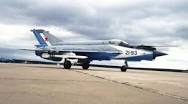
However, the rage has got revived with US claiming that the entire fleet of F-16s supplied by them to Pakistan is in tact that falsifies Indian claim of a victory in dog fight between Pakistani F-16s and Indian Mig -21s. We trust Indian Government and IAF, because we as a nation have always steered clear of fake claims of victories, for such claims are short lived and do not help the cause of the nation. We have had repeated military victories over Pakistan, though we indeed suffered Chinese onslaught during the war of 1962 and we openly admit this fact.
The shooting down of world’s best fighter aircraft F-16 by obsolete MIG-21 is probably a too bitter a truth to be swallowed by both – Pakistan and US. By supporting Pakistani stand, US plays a smart game of achieving two objectives – (1) it reaffirms the superiority of F-16 as the best fighter aircraft in the World that’s almost invincible and (2) it allows the superpower to wriggle out of Indian follow-up regarding action against Pakistan for breach of condition that Pakistan would not use F-16 against India, but only in its war against Taliban in Afghanistan.
Let Pakistan celebrate and rejoice the American clean chit and Indians feel sense of rage at this myopic stance of the superpower! Truth shall prevail as history cannot be changed or rewritten by using false propaganda. But IAF and Govt should review their preparedness, especially keeping in mind an obsolete MIG-21 taking the most modern F-16 heads on in a full fledged war! Above all, let’s hope and pray that there’s no war and good sense prevails over the people who matter.