Bridge is a unique word in many ways. A physical bridge connects the two ends of a river or any other water body or any terrain that’s required to be crossed without physical contact, but by having multiple qualities, one can bridge a gap without any physical construct. For example Shakespeare bridged a gap by being a novelist and a poet! But then you also build a non-physical bridge by taking a friendly initiative. For example Prime Minister of India is trying to build a bridge between the warring nations of Russia and Ukraine by initiating a dialogue. And how about a game of contract bridge, a popular card game that needs lot of strategising! And as a banker, I have so many times sanctioned a bridge loan to a customer who’s in need of interim finance pending finalisation of long term financing options! And boxers sometimes prefer to get their nose bridge removed to prevent serious injuries or bleeding during a boxing bout, while a dentist actually puts a bridge inside the mouth to align irregular teeth! And all of us must have heard about bridge in billiards, a nautical bridge in ships, a musical bridge, a chemical bridge between atoms in a molecule et al ! And while you may have very long bridges in the world, the word abridged actually means absolutely the reverse! It means to shorten something ! To end this with a Limerick:
Attempting to explain the meanings
And connotations of the word bridge
I went on and with its various usages
Till I ended up with an epic, requiring to be abridged!
Australia in particular and cricketing world at large lost two icons on two consecutive days. First was Rodney Marsh, the iconic Australian wicket keeper, who formed the deadliest combination with fast bowler Dennis Lillee. Marsh had 95 victims behind the stumps while keeping wickets for Lillee’s bowling. He had a career record of 355 victims while keeping the wickets that exactly matched with Lillee’s count of 355 wickets in test matches! Some coincidence this considering the two contemporaries.
The next day, the master of leg spin bowling, whose wizardry and craft took leg spin bowling to new heights, Shane Warne died suddenly at his beach house in Thailand, hours after writing obituary of his senior colleague Rod Marsh. At 52, Shane had no age to die, especially reckoning the fact that till few years back, he was actively playing in IPL and had taken his IPL team, Rajasthan Royals to new heights.
I come from an era when probably there was one cricketing series in one year, if not less. Players would take years to create landmarks such as 200 wickets, 5000 runs or 100 stumping/catches behind the wicket. For years, Bedi’s 266 wickets was a record for India, till first Kapil and then Anil Kumble broke it. Kapil, in fact, bettered Sir Richard Hadlee’s record! What I mean to say here is that for a bowler, 400 test wickets was big landmark, but the troika of spinners from three countries – Kumble, Warne and Muralitharan- created unbelievable record by taking 619, 708 and 800 wickets respectively.
And what makes Warne stand out is that he came from a country that was mainly known for its fast bowling, where the bouncy wickets supported pacers and where the team did not have a reserved slot for a spinner. In contrast, Murali and Kumble came for the subcontinent that had produced so many iconic spinners and where pitches helped slow bowling!
And Warne had a boyish charm about him! From dating Elizabeth Hurley to falling head over heels in love with his eventual wife, who left him after his adultery was exposed, he always hogged the limelight. But that couldn’t take the sheen off his mesmerising bowling that comprised several unique events like the magic first ball that spun from outside the leg stump to uproot Gatting’s middle stump or the bowl that spun more than 6 feet, if I remember correctly.
Wish Shane could have lived a few more years and imparted his knowledge of leg spin bowling to more youngsters so that the cricketing world could see the magic on the field by more Warnes!
A fellow blogger, whom I follow and who, in turn, follows me has penned a very heart rending poem on the war and its utility. With the current Russian- Ukrainian war wreaking havoc, more so on innocent citizenry, especially of Ukraine, the situation is quite grim. India faces additional challenge of extricating large number of Indian students studying in Ukrainian institutions.
Under the circumstances, I also feel distressed and I think verse is a natural outcome of an aggrieved heart. My lines read as below:
A visit to Lucknow seems incomplete without a visit to Ayodhya. The very thought of visiting the birth place of Lord Rama evokes a feeling of deep devotion.
It’s about two hours drive from Lucknow to Ayodhya. Once you enter Ayodhya, the atmosphere turns very pious and full of fervour. The entry into the shrine, the sanctum sanctorum where the idols of Ram Lalla that have been retrieved from the earlier demolished structure are placed albeit temporarily as mentioned subsequently, is restricted up to 11AM after which the temple reopens at 3.30 PM. We were lucky to have reached just inside 11 AM and after series of security checks, reached inside the shrine. It was Aarti time and the sakshatkar ( darshan or sighting of the lord’s idol) combined with chiming of bells and drums accompanying Aarti gave goosebumps!
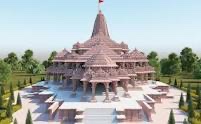
Of course, as aforesaid, currently the idols are placed in a makeshift place under high security and the construction of the new Ram temple is in full swing. It will be a massive structure and an architectural marvel when completed.
Thereafter, our local contact took us to an ashram that runs a Gurukul too. A very simple basic food comprising dal, rice, chapati and two vegetables tasted heavenly. Then it was time to visit two more temples – Kanak temple dedicated to Sita and a high temple situated on a hill top dedicated to Lord Hanuman. Finally, we just drenched our feet in the holy waters of river Saryu that has so much historic and religious significance.
A visit back to Lucknow was highlighted by a midway tea break where homely tea was served with yummy samosas.
Thanks to our local contact person, personal felicitation at Ram temple, Hanuman temple and the Ashram, where we had lunch, in the form of Garlands, sweets and stoles with Ram’s name printed on them, added to the overall divinity of the experience.
Ayodhya visit was an icing on the cake as far as overall Lucknow experience is concerned.
Sharmaji ki chai, Bajpai ki kachori, Shukla Chaat, Royal Cafe, Ram Asrey, Prakash Kulfi and Tunday Kebab may be just names for an outsider, but all the above are mandatory visits when one is in Lucknow, as important as the iconic places such as Imambara, clock tower and Rumi Gate are.
Sharmaji’s kulhad chai, served piping hot is heavenly when eaten with bun Maska ( white butter) or samosa. For Bajpai’s Kachori, served with chana aloo and salad, there was a 50 metres long queue during lunch time, but luckily my wife was with me and ladies’ separate queue was slightly more manageable. Shukla chaat starts business at 4 PM and you are lucky to savour his delicacies if you make it to his nondescript place after 7 PM. Ram Asrey made us taste a full plate of Ras malai and gilauri ( sweet wrapped in a beetle leaf) but didn’t charge a penny, saying that tasting was free! Prakash Kulfi suggested that we should opt for half portion as the full would be difficult for two of us to finish! And Tunday Kebab advised that we could do some more shopping as our order would take at least 30 minutes to be executed!
And of course, Lucknow chikan work made my wife, her sisters and friends ( who were frequently taken on video calls) go berserk! Exquisite artistry, master craftsmanship and a variety that was simply mind boggling provided us with an experience that was unique! Ada, Nazrana, Nazakat were such household names amongst the chikan work lover surprised us as virtually everyone, for whom we shopped, seemed to be aware of the above iconic chikan shops, right in the heart of Lucknow in Hazratganj.
But the icing of the cake was our stay at Taj Mahal Lucknow. Their hospitality was unmatched, food delicious and Taj personal touch making us yearn for even a longer stay. The moment we mentioned of a Lucknawi delicacy – shami kabab, galouthi kabab, Zafarani biryani – they would serve us on the table ! Ultimately, we ended up lapping up all the food at Taj and yet couldn’t resist Lucknow street food, resulting in we over eating on each of the day of our stay there at! I am seriously thinking of some fasting after returning to Mumbai.
As our trip fast approaches it’s end, the very thought of leaving all this Lucknow’s hospitality, food and above all tehzeeb behind is making us go weak in the knees! And of course, my earlier blog of life changing experience of meeting Dr Ashok and his wife combined with this makes our this Lucknow visit very very special.
We have all heard about doctors who prefer holistic treatment of any ailment to symptomatic treatment. Holistic treatment goes a step beyond prescribing recommended medicines to treat the ailment and tries to address the underlying cause of the ailment.
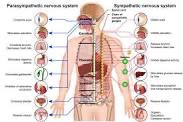
Our body’s autonomous nervous system comprises sympathetic nervous system ( located between the thoracic and lumbar regions of the spinal cord) and parasympathetic nervous system ( located between spinal cord and medulla). Sympathetic nervous system’s primary function is to stimulate body’s fight and flight response, which it does by regulating heart rate, rate of respiration, pupillary response and more. Parasympathetic Nervous system on the other hand stimulates body’s rest and digest and feed and breed response. Both of these systems have “opposite” actions where one system activates a physiological response and the other inhibits it.
When we worry ( about job security, promotion, rat race, money, assets) or have other negative thoughts ( criticism, jealousy, envy etc) it stimulates sympathetic nervous system and leads to increased heart rate, respiration, sweating etc that in turns lead to lifestyle diseases such as diabetes, blood pressure and heart ailments. Parasympathetic Nervous Systems inhibits such excitement and leads to relaxation by lowering heart rate, respiration and any hyperactivity or excitement in general.
Therefore, the control of whether we want to live a healthy and rich lifestyle or a lifestyle filled with stress, tension and diseases lies with our mouth. Whether we are stimulating our sympathetic or parasympathetic nervous systems depends on what we eat and what we speak, both of which are functions of mouth. If we eat healthy food, at regular intervals, less than our appetite and speak a language that doesn’t cause any offence or hurt to anyone, we shall always be letting our bodies stimulate parasympathetic nervous system, which is a key to happy and healthy living.
The above and many such pearls of wisdom were gained by me today when we met a very old acquaintance Dr Ashok and his ever affectionate wife Neelam ( in fact, though we have been talking to them on phone, the meeting in person happened after 35 grand years! ). Dr Ashok is now fully into social causes, trying to spread the message of healthy and happy living to the society at large, besides being passionately devoted to his profession.
Meeting Doctor and his wife has been the highest point of out currently ongoing visit to Lucknow. More of this in next few blogs.
I was watching Doordarshan one evening and though I don’t exactly recall the period or the name of the programme, it featured the pop star Ajit Singh singing with a live orchestra. One number that made a very deep impression on my young musical heart was “ Chalte chalte mere yeh geet yaad rakhna “. Never heard of till then and full of melody that was typical to the music of early and mid 70’s, I soon came to know that the number sung by Ajit Singh was in fact a track from the film album titled “ Chalte Chalte” and that the original number was composed by Bappi Lahiri and sung by my favourite Kishore Kumar.
Those were still the days dominated by new sounds introduced by RD Burman and his scores for movies such as Caravan, Yaadon Ki Baraat, Jawani Diwani were making waves. These sounds and instrumentation inspired by global music, with generous contributions from Pancham’s own creativity and ingenuity, were unheard of by Indian music fans, who were by then only exposed a stray westernised composition by C Ramachandra, OP Nayyar and SD Burman!
In all this, young Bappi Lahiri had started making waves. While Chalte Chalte had hummable music but the movie was passable, other movies by Bappi were also not quite up to the mark, though his music had started carving out a niche for itself. Aap Ki Khatir introduced Bappi, the singer, to the audience who lapped up his Bengalicised diction and virtually made “ Bambai se aaya mera dost” a national anthem. I don’t recall any youth gathering , picnic or travel, when the groups were not singing this highly entertaining song! And he interspersed melodious Indian raaga and folk based music with generous doses of purely western music. I recall the rage amongst youth around the numbers such as Ramba ho samba ho and Hari om Hari. Usha Uthup was introduced by RD Burman much before in the movie Hare Rama Hare Krishna, but the aforesaid numbers by Bappi took her to dizzying heights! And who can forget the music of blockbusters like Namak Halaal ( pag ghungroo baandh Meera nachi thi and raat baaki) and sharaabi ( inteha ho chuki pyaar ki – my personal favourite, aaj rapat and manzilen apni jaga hai, apart from much hyped mujhe nau lakha mangwa de). And there were scores of such movies whose music lifted the mediocre movies to hit status. But I think the high point in Bappi’s career was Disco Dancer that gave him the coveted title of Disco King. A new singer, Vijay Benedict, belted out the title song that became a household favourite.
Bappi was like a factory churning out music and he replaced LP as the favourite music director of southern remakes. Who can forget the superhit music of Tohafa, some of whose songs have been remixed and presented again. Of course, Bappi’s most popular remixed number has been “ Kaliyon ka chaman”. A melodious but not an extraordinary number originally sung by Lata for a nondescript movie, the remixed number became a rage upon its release, being the most belted number by DJs!
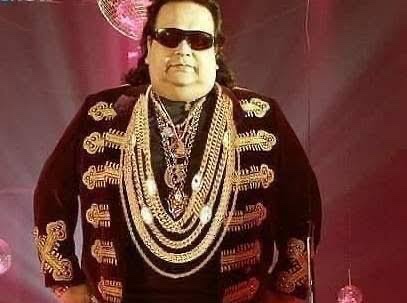
Like all good things, with the demise of his favourite Kishore Mama, slowing down of singing by Lata and Asha and rise of new music directors like Anand Milind, Jatin Lalit, Nadeem Shravan and Anu Malik, music by Bappi in later years was mediocre. However, he made a grand comeback as a singer by singing Bambai Nagariya and later Ooh la la for the same composers, Vishal Shekhar. And he was a permanent fixture as guest in musical shows, especially for the episodes that featured his songs and the pride and satisfaction of having created such a vast repertoire was clearly written on his rather baby and innocent face. Who can also forget his love for gold, that adorned his body heavily!
I also had the fortune of seeing Bappida performing live with his orchestra, and his grandson, of whom Bappi seemed to be immensely fond of, reminded the audience of a young Bappi. It was electrifying experience watching Bappi singing his old gems
The news of Bappida’s sad demise this morning plunged millions of music lovers across the world into an even deeper sorrow, as they were yet to come to terms with the shock of Lata Didi’s death! A child prodigy, who played tabla and came from a musical family, Bappi leaves behind a legacy and work that will always remain in the hearts of millions of music lovers!
While I turned a regular blogger only a few years back, writing has been a passion for quite some time. I accidentally came across an old piece of paper containing an old anecdote. Like my most of the writing, this piece has no dependence on the date as the incident remains unique in spite of it being more than a decade old. I reproduce this anecdote, as written in hand on a scrap of paper sometime during May 2011. It reads:
This month I turn one short of half- century- 49 years old to be precise. All these 49 years, I have lived a very simple and straight life. I still retain my original moustache ( only occasionally trimmed during the hair cutting sessions at the salon) , worn no jewellery (ear studs, rings or thick gold chains flaunting hairy chest) , kept short crew cut hair and never indulged in luxuries such as facial or massage. The only liberty I have taken is to colour my hair the natural way using henna. Actually, I started greying quite early in my life and my wife suggested to cover streaks of grey with natural henna, soaked overnight in a black iron vessel mixed with some other proven herbs such as amla and shikakai powders. She had actually learnt that by applying this concoction at the very beginning restricted further greying and in fact, led to permanent blackening of strands already turned grey! However, these claims proved to be wrong and the frequency at which henna was applied on my head gradually increased from once a month to almost every week! My hair became dark red ( or rust coloured)!
My wife, being a proponent of the cause, persisted with her effort dutifully and indulgently affirmed that I looked good with this red top. The market seemed to think otherwise! I could make out the by the bemused looks on the face of people in my contact as also cheesy comments behind my back ( red haired/ horsey).
A few days ago, a very senior colleague of mine, while in the midst of a very serious official meeting, digressed from the topic to ask me as to why I was colouring my hair? As per him, with such good looks and sharp features, salt and pepper on my top would give me drop dead gorgeous looks! On returning home I told my wife that the time had come for me to stop hennaing my hair and keep my head top natural. Of course, she was crestfallen, but being a loving wife, she was also wary about my career prospects! Gradually, the last traces of henna wore off my head and in the midst of all the salt, I am trying to search for a few grains of pepper. In a few nights, my status has changed from bhaiya to uncleji and the worst scenario is, people offering me seats reserved for senior citizens in local train and BEST bus. The senior colleague looks at me sympathetically as drop dead gorgeous looks seem elusive, the only solace being these looks seem to be a tad better than red haired horsey one!





 Arvind Arya blog