Self image & Overanalysing

This would have been my third experience of listening to the discourse by His Grace, Ramrupa Prabhuji, Head Priest ISKCON, Juhu. I was unlucky to miss this golden opportunity to enhance my personal value, but ever generous and gracious hosts , Vidhi and Sushil converted my misfortune into boon by sending me full recording of Prabhuji’s superb knowledge session. As always, he started with a beautiful story about a disciple who asked his guru that how come in spite of attending to so many of Guru’s discourses, he had learnt or retained nothing? Guru asked him to go and buy a bottle of liquor; disciple was shocked but he went ahead. Guru then asked him to take a swig repeatedly but ensure that not even a drop went down his throat! Disciple kept on taking swigs and spitting. When the bottle was finished, Guru asked disciple whether he was feeling drunk, which the disciple was not for he had not taken even a drop inside! The same happens when we hear a Guru’s sermon, but imbibe nothing. Prabhuji gave a very humorous connotation of ISKCON, applicable to many – Is Kaan (ISKCON) se suno or is kaan se bahar kar do!

His class or knowledge session covered two themes – (1) Self image and (2) Overanalysing

(1) Self image – Those with low self image need approval of others. This point was beautifully explained by Prabhuji by citing characters from Mahabharata most effectively. It was wonderfully explained that why Dhritarashtra, Gandhari, Duryodhana and Karan had low self image, while Yudhishthira, Arjuna and Krishna had high self image. Prabhuji then explained as to how positivity and self confidence led to the high self image. As he quoted Vyas Dev’s quote in Sanskrit from Harivansh Puran, aptly explained in English:

If you want to avoid fight, stay quiet.

If you want to escape fear, remain awake in self realisation

If you want to avoid hunger and thirst work hard

If you want to get rid of all sins, chant Hare Krishna.

Difference between love and attachment is that love empowers you, attachment weakens you.

Those who came in contact with Prabhupada experienced love. “If you’re happy, I will be pleased,” Prabhupada told when his disciples asked him what they needed to appease him.

Attachment shapes one’s self image and mirrors desires to seek approval from others. Love shapes one’s self image and mirrors extreme self confidence and empowers one.

To sum up, unconditional love for people around us without seeking any return enhances one’s self image and listening to good thoughts by holy men or in the company of a Guru one attains this objective.

(2) Overanalysing

When Rama was told by Kaikeyi to go to forest for 14 years, Rama took it in his stride and he just smiled ready to obey. He didn’t overanalyse and accepted her diktat as a non negotiable reality.

When Arjuna went to Swarga to meet Indira, he saw Urvashi! Urvashi misconstrued Arjuna’s state to be his interest in her, though Arjuna was staring in wonder how the wife of his ancestor still looked so young ? As he viewed Urvashi as his mother-like, he rejected her offer to enjoy. On being rejected, she cursed him to become eunuch. He accepted curse of Urvashi as gift of life. He neither overanalysed Urvashi’s offer nor her curse.

4 ways to deal with people:

Apathy I don’t care

Sympathy I feel for you I don’t do anything

Empathy I feel for you share your suffering

Compassion- I see you see, your suffering and want to help

When we act with compassion, we act from our heart and avoid overanalysing.

I take it as a great blessing that time and again our neighbours and hosts provide the residents of our complex with this unique opportunity to hear Prabhuji’s pearls of wisdom that have so much relevance in our day to day lives. I exhort all the residents to benefit from these sessions the way I am reaping.

Hare Krishna Hare Krishna Krishna Krishna Hare Hare

Hare Rama Hare Rama Rama Rama Hare Hare

We shall overcome

Chandrayan 2 is not a failed mission, but a moment of glory for a proud nation. Only triers succeed and our great scientists will make ISRO’s space quest a great success, the nation has no doubt. Overwhelmed by this entire episode, I have composed a few lines in the honour of this great effort. It’s called “Chandamama door nahin” (Moon is not far):

CHANDAMAMA DOOR NAHIN

When Armstrong landed on the moon,

India was still struggling to fulfil basic needs;

While the countries of the world improved their GDPs,

Reaching for the moon was still distant indeed.

But India’s aim was unambiguous and clear,

The basis needs were not to be forgotten;

Not at that cost of technological advancement,

But come what may, moon was to be begotten.

And Bhabhas , Kalams , Kasturis & Sivans the sharp minds,

Put their best foot forward with whatever they got;

Indigenously developed rocket technology to put satellites,

And they aspired to reach the moon one day, who thought?

And then that day came in all it’s glory,

From SHAR station Chandrayan took off to go there;

Not only to reach moon, where mankind had already reached,

But to the Lunar South Pole, no one had been to where!

Finally the journey commenced on July 22nd,

Days of hard work by scientists bearing fruit;

And Chandrayan cruised to the nation’s pride,

Crossings all its milestones as per schedule.

A nation in anticipation of a great event,

Was ready to go rapturous in celebration;

But the sudden loss of communication,

Changed elation into grief for the nation!

But why cry Sivan and company,

India is destined to go places;

Nation will always stand with its brilliant minds,

Chandrayan 3 will bring smile on our faces.

Salute to all the scientists led by K Sivan! Jai Hind

Influence without affluence

Heard a very moving story of our own great Sindhutai, rightfully known as “Mother of Orphans”. She was born in a village of Maharashtra in a poor peasant family. Instead of sending her to school, her parents asked her to take out buffaloes for grazing. At the age of 8, she was married off to a 30 years old man and by the time she turned 19, she was already a mother of 3, pregnant with the 4th. That’s when she raised her voice again a village strongman exploiting poors. This rattled him, leading him to Sindhu’s husband. He told him about his wife’s loose character that she was sleeping with many men around and that child in her womb was not her husband’s but the strongman’s. He advised the husband to kill such a characterless woman. Her husband beat her mercilessly , including kicking her stomach and thinking her to be dead, dragged her to the cowshed to concoct a story of her having been trampled by cows, buffaloes and oxen ! An unconscious Sindhu was protected by a cow, who stood over her to save her from being trampled. Sindhutai miraculously gave birth to a girl there and cut her umbilical cord using a piece of rock. Totally broken and with an infant in her lap, she started her journey of epic struggle. Totally distraught, she decided to commit suicide by lying on the railway track with her infant. That’s when she heard a cry from a totally disabled person in great distress. Taking it as a call from Lord Krishna, the supreme Godhead, she got up, helped the old disabled person and started taking care of him along with her baby by asking for alms. She realised that Lord Krishna had some higher purpose in life for her. That’s when out of the alms she collected, she started taking care of orphans and urchins. As it is said, rest is history, with Sindhutai earning the sobriquet of “Mother of orphans”.

The story doesn’t end here but has a twist! One day she saw an old, haggard, sick and almost disabled person at her doorstep asking for her help. With difficulty, she could recognise the man to be her husband. Being magnanimous and large hearted, she agreed to admit her husband into her orphanage, but as her son and not husband. Today she introduces him as her eldest son. Of course, a large number of her orphan children are today professionals and highly paid individuals, including her daughter born in the cowshed who is a Medical Doctor.

While Sindhutai’s story is now well known, hearing it from Swami Radhanath, the inspiration behind ISKCON’s free midday meal for 1.2 million school kids across India, and instrumental in founding the Bhaktivedanta Hospital in Mumbai, the story brought about a very different perspective of Lord’s wish and life’s higher purpose. His use of the phrase ” Influence without affluence” that so aptly applies to Sindhutai’s struggle and work clearly establishes superiority of compassion and purpose over money.

Hare Krishna Hare Krishna Krishna Krishna Hare Hare

Hare Rama Hare Rama Rama Rama Hare Hare

Move aside Shakespeare Shashi Tharoor is here!

Earlier, the standard of excellence was Shakespearean English. However, the old bard is no longer a role model idolised by the connoisseurs of English language as he seems to have yielded way to our very own Shashi Tharoor and Tharoorian English seems to have replaced Shakespearean English.

The ideation for this blog came from a WhatsApp post forwarded by a friend of mine that beautifully describes a very humble food item, soup, in a highly embellished English that reads:

“Glutinous admixture of herbaceous viands, succulent meats and pulverised legumes daintily stewed over a benignly blazing flame.”

Whether the above is actually said by Shashi or not is a matter of conjecture, but what is almost certain is the presence of all the above in his vocabulary.

Much before Tharoor’s ornamental English caught fancy of the folks, I used to get enamoured by extremely artistic description of food items in the menus by elitist restaurants. A few examples that I readily recall are:

“Dumplings of farm bred tender chicken marinated in the choicest herbs and spices and then cooked in simmering heat in hand churned buttery sauce with fragrant ingredients.” – Butter chicken

“Organically grown okra in the green farms and cherry picked by our Master Chef and cooked in virgin oil with most luxuriating spices and tender slices of shallots and green chillies.”- Humble bhindi.

“Tender aubergine filled with most aromatic spices through a fine slit and curated for hours before shallow fried in a pan on slow fire to capture all its taste and essence”. – Poor brinjal or bengan.

It’s said that language has the power of creating magic from ordinary situations – ordinary stuff such as bhindi, bengan and chicken! While credit has to go to writers like Shakespeare, PG Wodehouse and now Shashi Tharoor to bring to the fore finer nuances of embellished language to commoners, this, though more evident in English, is not unique to it. Another language that has the capability of creating magic out ordinary is Urdu. It’s nazakat or finesse is such that it can connect you to the God almighty through most earthy things ! In a beautiful Urdu punjabi humour by ever dependable Anwar Masood that captures conversation between a gentleman and his cook, humble bhindi is beautifully described as “long and slim, fresh and crisp and stuffed with goat’s mince” making it a real royal dish in the imagination of the listener/ reader! Long live the power of language and linguists unveiling this power!

Happy Teacher’s Day

On this day i.e. 5th September of the year 1888 was born a great philosopher and statesman, who went on to become the second President of India, Bharat Ratna Dr. Sarvepalli Radhakrishnan. Having taught philosophy in Madras Presidency College, Universities of Mysore and Kolkata and University of Oxford, he was appointed Haskell lecturer in comparative religion at the University of Chicago. His philosophy was grounded in Advaita Vedanta and he influenced worldwide understanding of Hinduism. He believed that “teachers should be the best minds in the country”. It’s for all these inherent strengths of his character that we have been celebrating his birthday as Teacher’s Day since 1962, the year he assumed the office of President of India.

In our school, Teacher’s Day meant a day of rest and introspection for teachers. Senior students used to double up as teachers and teach junior classes. Other activities such as debates and dramatics also used to be a feature of Teacher’s Day celebrations.

Today, when westernised way of thinking and life dominates our day to day existence and Google knows it all, the importance of Teachers is becoming understated. In any case a Teacher is more of a source of information on subject matters rather than a messenger of worldly wisdom that earlier stood by an individual during the thick and thin of his or her life. But I am firmly of the opinion that if we aim to produce next generation of law abiding, cultured, tolerant and achieving youngsters, the institution of school and teachers teaching therein must be strengthened and projected and not understated. Teachers will have to assume the mantle of Guru to get back that respect from pupils and status in the society. A guru goes beyond the subject knowledge to inculcate virtues of truthfulness, honesty, respectfulness etc to produce a pupil who is not only subject matter expert but a life expert!

Teacher’s Day, which is different from Guru Purnima, has its origin in Dr Radhakrishnan’s birthday and importance bestowed by him on education and teachers whereas Guru Purnima has its origin in our shastras and is part of our culture and tradition. Now that we don’t have Gurus of yore, the onus is on modern day teachers to take on the mantle and help producing next generation of top class citizenry that takes our nation to newer heights!

I bow as mark of respect to all my teachers who contributed to making ma what I am today! This blog is dedicated to all the teachers of this world! Happy Teacher’s Day!

Afterlife

This blog is not about the mystical afterlife – near death experience (NDE), journey to heaven or any such thing that we are all always eager to know about! This is inspired by an article about how one is put on a high pedestal posthumously and all the terrible flaws and vices one is panned about in his or her lifetime are all forgotten after one’s death. As they say, epitaph and obituary contain lies and more lies and nothing but lies! The article very deftly captures how the shortcomings of a person suddenly become his strengths once he ceases to exist physically on this earth!

Nasty disposition becomes no nonsense attitude refusing to be taken for granted, overindulgence in food and liquor responsible for person’s heart ailment and liver cirrhosis become epicurean and connoisseur of good things in life and the evilness of scandal mongering becomes the quality of need to connect with society. It’s not all. One’s reservedness becomes choosiness about the company the dead man kept and miserliness becomes rare type of generosity making those rarest occasions very precious. Lastly, he won’t be missed becomes forever present in our hearts!

And though death is a permanent parting of company, this eulogisation is actually true in all sorts of parting. Once while bidding adieu to a colleague who had superannuated, people paid glowing tributes. This person in his farewell address very uncannily mentioned ” I am sure this is a gathering of most brilliant, virtuous and honest people, but I am yet to come across an occasion when the whole set of such distinguished people are all speaking lies at the same time!”

As another view goes, death being synonymous with end of a person, it’s an occasion of great relief and joy for the people to have gotten permanent ridden from a pest! No wonder it entices the best of oratory filled with most fervent passions for it’s said that obituaries are generally the finest speeches!

Down Memory Lane

There is an article in Readers Digest latest edition on the cinema theatres of yore. It makes a mention of Kolkata’s iconic Metro there at Esplanade. There was a mention of a grand chandler that adorned the central foyer of the theatre. Responding to the article, several readers got nostalgic about their respective childhood. A reader made a mention of Mayfair theatre in the heart of Lucknow in Hazratganj.

Such articles take a reader to a journey down the memory lane. I remember the days when going to a movie was actually a big event that used to be planned well in advance. Generally, fathers, whose offices used to be either in central business districts ( Connaught Place in Delhi or Fort in Mumbai or Esplanade in Kolkata) or close to it would book tickets in advance for a weekend show. Iconic theatres such as Regal, Odeon, Plaza, Rivoli ( all in Delhi), Regal, Eros, Sterling (in Mumbai), Metro, Globe ( in Kolkata) were all located in city centres and going for movie meant visit to a fine dining restaurant and shopping as well.

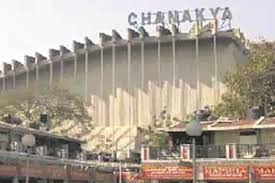
Then there were some unforgettable events. Delhi’s and probably the country’s best theatre Chanakya opened with the premier show of Raj Kapoor’s classic flop Mera Naam Joker! People would just visit the theatre to see it and salvaged the flop movie to some extent. Then there was all time favourite Sholay released in 1975. The booking plans used to open on Monday and fill up within an hour for the entire week! Plaza in Delhi used to show CinemaScope and stereophonic sound version of the movie and I remember managing to see the movie only after 6 months of its release! Those were the days when the movies used to run for weeks and years celebrating multiple jubilees unlike present day when all that matters is the first weekend! Almost all the names mentioned above are either closed in converted into multiplexes, last surviving theatre being Regal bang on the circle at the beginning of Colaba!

Today’s multiplexes have latest projection systems, Dolby sound, push back plush seats, superb air conditioning, well stocked cafeterias and class gentry! What they probably lack is the soul that those movie theatres with well lit spacious lobbies, large auditoria and people throwing coins on the screen or dancing on the favourite number had! To watch popular movie Jai Santoshi Ma, viewers would go to theatre bare feet!

We all talk about technology and luxuries of the present times! What we miss is the spirit and soul when every small thing was a big event!

Ganpati Bappa Moriya

It’s time to welcome our beloved elephant god Ganesha in our homes and hearts! Tomorrow is Ganesh Chaturthi, the birthday of our favourite Lord and commencement of 10 days long Ganesha festival that will colour the entire country in its mood – more so our city of Mumbai! There’s festivity all around – Pandals are doing last minute finishing touches to be ready to welcome mammoth Ganesha idols, homes are being cleaned and decorated to bring the Lord home for a period ranging from 1.5 to 3 to 5 to 7 to 10 days and markets, which are witnessing an unprecedented recession, are suddenly flooded with hordes of buyers doing last minute purchases for the ensuing festival.

Actually, awareness about the festival and popularity of this elephant god sank in completely after we moved to Mumbai. Earlier, we knew that the festival was celebrated with special fervour in Mumbai, mainly through Bollywood, but after coming to Mumbai, we couldn’t resist but got immersed in great spirit of this hugely popular festival. This year we will be bringing Lord home for the 17th year in a row. This is a tradition that we became aware of after coming to Mumbai and we have been able to maintain for past so many years, notwithstanding come what may! This has all been possible because of Lord’s blessings and his willingness to be our guest.

And what a guest he is indeed! The moment he enters our house, things are not the same! There are other guests coming over to seek his blessings, variety of sweets and foods, chanting of mantras and a general all round gaiety. How the time passes is something very difficult to explain! And then suddenly it’s time for Bappa to go back to reunite with his mother, a folklore and faith this immersion of his idol is symbolic of ! And he carries with him all our sorrows, grievances and ailments and creates a new energy and hope to last till his arrival next year.

The festival is little akin to Durga Mahotsav celebrated with special fervour in Bengal. Like the efforts of Raja Ramamohan Roy, the efforts of Bal Gangadhara Tilak made celebration of this festival sarvajanik or public with group of residents/people coming together and celebrating rather than it being celebrated privately in individual households. This lends an element of community and social significance to this festival.

We are all agog at the very thought of Bappa’s arrival this year like we have always felt during all those last 17 years ! As we always discuss, earlier we would only wait the whole year around for Diwali; Mumbai and Bappa added Ganesh festival to the occasions we wait for!

Ganpati Bappa Moriya!

Are bosses monsters?

I wrote a blog on the leadership and whether leaders are proprietors or partners? An avid reader of my blogs has suggested that I should also write about the staff or team members and what bosses expect from them ?

I love cartoon strip Blondie and Dagwood is my favourite character because in a way he’s like me – understated, hard pressed, taken for granted but above all a simpleton to the core! In today’s episode his boss asks him in the morning whether he will handle contracts or reports? Dagwood doesn’t make a choice, leaving it to the boss, who dumps both the chores on him! Ask Dagwood whom he hates the most in his life and his reply will be “Bumstead”. Dagwood treats Bumstead like a real pain and treats him like a monster. Bumstead allows no raise, always feel that Dagwood is underworked and overpaid, doesn’t like his employees taking refreshment breaks and laments about the company’s ability to afford “so many” and “such expensive” employees. This beautifully sums up the expectations that a boss has from his team – do more work, come cheap, shoulder full responsibility, don’t ask for help or additional hands or promotions and be thankful for your job and salary as there are hundreds more waiting to grab your desk should you behave protestingly !

Jokes and comics apart, I have had the good fortune of working with the bosses of varied styles- some were very strict, a few other tough task masters, some very easy to access but a few very exclusive and reserved, some very generous while a few close fisted! However, I feel doubly lucky to be a part of an institutionally run organisation rather than a proprietary concern for this has given me an opportunity to work for the organisation rather than any boss! Also, my fair assessment based on donkeys years of experience is that people largely are not inhuman or unreasonable (though at times their expectations could be) and that if one does his chores sincerely, honestly and ably, one seldom hits a roadblock irrespective of the boss or his nature or his style!

No wonder Bhagvad Gita is now considered the best management book and in one sloka, it encompasses the gist of the work ethics and relationships that’s so oft quoted by me in my blogs but I can’t help but to quote it again for its purity and relevance that reads:

कर्मण्येवाधिकारस्ते मा फलेषु कदाचन मा कर्मफलहेतुर्भुर्मा ते संगोऽस्त्वकर्मणि

You have a right to perform your prescribed duty, but you are not entitled to the fruits of action. Never consider yourself to be the cause of the results of your activities, and never be attached to not doing your duty.

Bosses provide their vision and leadership but it’s also a fact that they come and go. Organisations survive generations of bosses and so do employees who give their best and take full responsibility and ownership. Lores shall remain replete with the marquee thoughts of boss- employee relationship and Dagwood-Bumstead saga will continue to tickle the funny bone of readers for generations, but seen in the light of Bhagvad’s teaching it’s not all that tough as it seems!

Have we done anything to Pakistan?

Pakistan seems to have lost its balance of mind. Was it expecting India to handover Kashmir to it on a platter that it is reacting so weirdly to abrogation of the Articles 370 and 35(a)? India has always maintained that Jammu & Kashmir is its integral part and what one does with its own territory or people is strictly one’s own prerogative. However, if one is to see the reaction of Pakistan and its citizens, it seems India has perpetrated a full fledged war on that nation! They are unearthing ages old video footages showing Kashmiris protesting or pelting stones at the security forces. There are also video clips of acts of barbarism, doctored, dated or of some other countries not clear, but definitely fake!

After it’s failed attempts to internationalise the issue by raising it in UNSC, albeit in a closed door scenario piggy riding on China’s support, Imran is feeling let down by Islamic World. UAE bestowing it’s highest civilian honour order of Zayed is a clear indication of what the world, including Islamic world, thinks about Pakistani stand in the matter.

There’s a video going viral on Youtube in which former Pakistani cricketer Javed Miandad seems to have lost his sanity and he can be see crying hoarse calling for action again India, including the use of nuclear warfare. There was a similar reaction to Priyanka Chopra’s support for her country by Pakistan calling UN to revoke her Peace Ambassador honour.

I am a moderate and I firmly believe that social media and other means of communication should be used to spread goodwill rather than hatred and that if it’s a matter of valour and honour, war should be fought face to face rather than cowardly by piggy riding the terrorists. If Pakistan feels the need to be self styled saviour of Kashmir and Kashmiris, let it develop that stature and respect; as for India, India has always showered love and affection on Kashmiris and for that matter on everyone – of any nationality, ethnic group or religion. We are not fascist as Pakistan is trying to project India and Modi as – the entire Muslim world is not blind or fool to be respecting and honouring him. As a statesman he wishes well for all minorities, included Muslims – anything else, leave apart Muslims or the world – Indians themselves will not tolerate! We have to build a new India – prosperous, peaceful and purposeful. Noise made by Pakistan will not affect this roller coaster journey of India into glory in future!