Women’s day- a slightly different perspective

It’s the time of the year when we suddenly remember about gender equality and women empowerment. This is the problem with the designated days – international rose day, Mother’s Day, Father’s Day and more of their ilk! You only remember about the importance of these persons and objects on that particular day to merrily forget all about them for the remaining part of the year!

What happens during the rest of the year? A woman is beheaded by her father for eloping against his wishes! A woman makes a video prior to her suicide along with her young daughter clearly attributing the extreme step to unbearable attitude of her husband and in laws! Women are lasciviously ogled for wearing a hot dress, lambasted and boycotted ( if lucky not to be killed) for marrying outside caste or religion, ridiculed for joining “#Me Too” movement for certain acts perpetrated upon them way back in the past, discriminated, if not exploited at the workplace, criticised for being career oriented at the cost of homemaking et al !

If I cite here examples of an auto driver’s daughter being crowned Miss India or Zoya Agarwal commandeering an all women crew to the world’s longest flight over North Pole or Bhawana Kanth, the first woman fighter pilot or Shila Dawre, the first woman auto rickshaw driver or Shital Gawande , bus conductor in BEST or Dr Mazijiya Bhanu, a hijab clad powerlifter from Kerala and many more , it would sound so very cliched for that again will tantamount to a discrimination !

If Ganga, our earth, cow and all such reverential objects are feminine and we are Devi poojaks, we shall have to stop getting astonished at women achievers, provide the best and equal opportunities to our daughters, sisters and wives ( and even mothers – a mother passing her class 12th examining in late 60s us awe inspiring) and stop citing examples of Ma Durga, Mother Mary, Mother Earth, Mother India, Mother Teresa, Mata Nanaki or Fatima as prelude to respecting women. Women have to be respected for being one of the halves, two of which make a human being.

That will be a true spirit of celebrating women’s day not only on the 8th of March but on each day of the year bereft of any cliches!

Happy Women’s day!

Banking is no less a revolution than telecom or automobile

As I cover the last mile of my banking journey, I am tempted to reflect at the changes that banking has seen over the last 3-4 decades. The first definition that we learnt was – banks accept money from depositors and lend it for business. The margin between deposit and lending rates is their profit for running operations.

While it would not be possible to describe the entire journey of banking traversed by me in a few lines and that would require a few volumes and at some stage I may pen my journey as my memoirs, a few significant changes that need to be highlighted are as under:

(1) I seldom visit a branch and do all my banking using mobile and internet apps. Branches have become more of sale and acquisition outlets rather than service outlets.

(2) The only fee we knew was processing fee on large corporate advances and that too we used to ask for apologetically, waiving it partially or completely generously. Little did we realise that almost all the services would become paid services, retail fee would outnumber the corporate fee and that fee will become as important component of bottom line as interest!

(3) Sale efforts were limited to “deposit fortnights” when the expectation was to open higher number of accounts that were generally used to be opened in normal course. Selling, including loan and third party products was completely unimaginable.

(4) The best banker was one who could write daily’s trial balance (called clean cash book) and tally ledgers promptly ( monthly exercise that consumed the most of a banker’s time) unlike today when we recognise and reward the best seller!

(5) This instance is oft quoted by me for it brings to the fore the irony of network expansion. When we wanted to open the second branch in one of the large 4 megalopolises, there was hue and cry from the first branch about serious threat to its business potential. Today we have at least 200+ branches in each of these cities and their adjoining suburbs.

(5) Treasuries would manage funds and liquidity and cover forwards for clients. That treasuries would become profit centres and undertake complex derivatives and other transactions for clients as also on proprietary basis was inconceivable.

(6) Credit card was a coveted possession and cheques of one of the foreign banks would inspire awe. DDs and POs were much sought after instruments and banks would take their own sweet time to issue them. Teller/ cashier queues were unavoidable for ATMs were few and far between!

The above list is very long and as aforesaid, summing up changes would require a volume or two. In fact, many of you can readily add to the above list from your first hand experiences. But it’s been a true metamorphosis, which is not as much talked about as telecom, automobile or internet revolutions, but is no less significant! It’s been a remarkable transformation, but more importantly it’s just the beginning! Some of the new initiatives in the pipeline are going to change the way banking is done. While the last 4 decades have been transitional, next 4 years could be transformational. And when we are seeing such a pace of change, who could risk making forecast for next 4 decades and hence use of the expression 4 years!

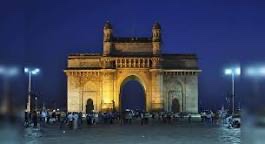
Fascinating city called Mumbai

I am a member of a fantastic FB group called Old Bombay to which I contributed the following verse composed by me as a eulogy to this fascinating and great city. The poem reads as under:

This city is historical
This city is mystical
Call it Mumbai or Bombay
This city is really phenomenal.

Folklore says Mumbai never sleeps
Yet it awakes every morning to start a new day
As if there’s no tomorrow
And all tasks need to be completed today.

It may seem unfriendly
Everyone rushing to his destination
Yet once you start knowing the place
You develop deep love for it and no infatuation

Dadar, Bandra, Andheri are not just names
They are places quite unique
With a lot of history and culture
Each place has its own intrigue

The place first scares you
With everything expensive including rentals
Then it grows on you
And you become sentimental

Mills have become malls
And many iconic landmarks have vanished
But change is the only constant
No change can affect its image to be tarnished

Vada pav, misal pav and pav bhaji
May be the street food of commoners
But now these are part of international cuisines
That are served openly without cutting any corners

Red Best buses may not match London’s fleet
But they are reliable and dependable
For Mumbaikars Best is iconic symbol
That makes their journeys pleasurable

And Mumbai local is not a lifeline for nothing
For a city of such magnitude and size
We saw plights of commuters during covid
If there is no local, there’s no life

I may not be a blue blood Mumbaikar
By having been born and brought up here
But I have made this city my abode
Home is where heart is there!

Covid’s first anniversary

I read in newspaper that 2nd March 2020 was the first day when Covid threatened to take the shape of a pandemic with the first set of travellers ( a middle aged couple from Pune) testing positive and it was found that more than 25 others, who had come in contact with the couple were also infected. This proved the contagiousness of the strain and its ability to spread rapidly and infect large parts of population, especially in a densely populated place like Mumbai. Till then only stray cases were observed mainly in Kerala.

How we all coped up with Covid between the 2nd March last year and today is now part of an experience that we all would like to forget. The initial days of Janta curfew, applauding Corona warriors, lockdown, Corona infections and resulting deaths, work from home, plight of migrant labourers etc are all etched in our memories like the most horrific experience of our lives.

Today vaccination has offered hope. The strain was also weakening till new more virulent strains were observed in South Africa and UK. Life is limping back to normal, but fear is clearly prevalent all over with a fresh wave not altogether ruled out. Agreeably, people have to come out of their houses to resume their jobs as sustenance is not possible by sitting at home. Also, people have to meet their beloved ones, whom they have not been able to visit for more than one year. But what’s not understandable is their callousness in not wearing masks, maintaining social distancing and reverting to bad old habits of spitting in open? Unless we are all aligned, transmission of the infection will not stop and we will not be able to exterminate the virus completely.

On personal front, I got the bitter taste of the malaise fully. My wife got infected, I too couldn’t escape it but most worryingly, my octogenarian mother had to be hospitalised and this was a real shocker as we saw senior citizens falling like ninepins having suffered Covid. But all’s well that ends well and I hope my personal story gets replicated for every household not only of this country but the entire world!

Beautiful Assam

For the first time I went further Northeast up Siliguri to visit Guwahati. Actually, it was accidental as our original plan was to visit our daughter’s family in Johannesburg but thanks to Corona no flight was available and hence this compromise to visit Guwahati.

I was always fascinated by this place – Assam in general and Guwahati in particular. One of my earliest childhood crushes was a beautiful Assamese girl and since that time, Assamese beauty has always mesmerised me! But this certainly was no reason to visit Guwahati – beauty lies in the eyes of beholder and its there all over if you see it with such a lens. It was a combination of lots of factors- division of the original Assam state, change of capital from Shillong to Dispur ( on which I wrote another blog), its tea gardens, wild life, Maa Kamakhya’s abode, beautiful city of Shillong, now capital of Meghalaya, cane and bamboo craft, presence of an old chum of mine, whom I hadn’t seen for ages et al. And I can only say that I wasn’t disappointed in spite of severe travel restrictions due to Covid.

Maa Kamakhya’s abode was understandably divine, my friend’s hospitality awesome, food yummy and sights as scenic as I expected them to be! In short, it was as expected and much more!

A holiday is always exciting and if it packs so much it becomes memorable. We couldn’t visit upper Assam and hence tea gardens; Kaziranga would have been too hectic; some of the other attractions beyond access. But whatever we saw, it was fantastic!

Childhood crush is infatuation

But not my yearning to visit Assam

What I aspired and ultimately saw

Has made me happy and calm!

I am posting a few photos also.

Pobitora wild life reserve of rare one horned rhinos
Another view of beautiful Pobitora reserve – my friend in pic too
Matchless beauty of Barapani enroute Shillong
My wife all drenched in divinity at Maa Kamakhya’s temple

Sacred and mighty River Brahmaputra- lifeline of Assam

Criticism need not be acerbic

I always advise people never to give advice.

The master of wit, humour and language does not cease to amaze me and in this work read most recently by me, the master PG Wodehouse exceeds all limits in illustrating what subtlety is all about.

Generally, his writings in first person are the events and happenings as being described by Mr Wooster. In one of the rarest cases, the master makes the valet, Jeeves the protagonist who is describing his Governor Mr Wooster as a prelude to a very funny story. He says, “ Mr Wooster is a young gentleman with practically every desirable quality except one. I do not mean brains, for in an employer brains are not desirable. The quality to which I allude is hard to define but perhaps I might call it the gift of dealing with the unusual situation. “

There are two aspects to the above. The first is suaveness of the language where even the undesirable qualities, defects, shortcomings- whatever you may like to call it is described in an exceedingly genteel manner in a very nuanced way, reminding us of our very own Lucknavi culture. It’s said that in Lucknow even abuses are rendered with utmost tahzeeb ( culture) and tameez ( manners) ! The second is that while the emphasis or highlight is on one undesirable quality, the main inadequacy of having no brains is subtly underplayed. And it’s not about Wooster having no brains, but the desirability of all employers to have no brains is a sheer master stroke by the author.

The author’s work, which to some appear dated and this was observed by me too in one of my earlier blogs, holds so much relevance in the current context, when loud, abusive and impure language is the order of the day. People write acerbically, holding no bars and using imperfect language that looks so ugly, especially on social media. Let’s make PG Wodehouse compulsory if we want a generation that speaks and writes not only good and floral English but understand the need for subtlety and understatement in presenting their thoughts.

Why my marks were deducted?

Twin cities can be fascinating as the same geography encompassing two distinct places can be a very interesting subject. The best example of twin cities is Secunderabad and Hyderabad. There is a bit of distinctiveness about two cities that are same yet different. The same is true for Kochi and Ernakulam though in this case the difference is less pronounced. Ahmedabad and Gandhinagar are not twin cities in that sense. People also speak about Durg Raipur or Kota Boondi in the same vein though these are separated by considerable distance and may not even have common border.

Readers must be wondering the context of the above and its relation to the caption of this blog. Actually, I am on a visit to Guwahati and amongst the important things on my agenda was a trip to Dispur, capital of Assam. In our student days, I was quite good at remembering state capitals but twice lost out on marks by naming Guwahati to be the capital of Assam instead of Dispur. But I always wondered if indeed Dispur was capital why was it not gaining popularity and attracting tourists and investors the way the then newly created another capital Gandhinagar was doing! Another case in the point is now being newly set up capital of Andhra- Amaravati, upon division of the erstwhile Andhra Pradesh into Telangana and Seemandhra! It’s attracting lots of attention and interest. Why then Dispur has remained so nondescript and relatively unknown, adorning only GK books? I have answers to the above questions now as discerned from my conversations with locals. Upon division of the erstwhile unified state of Assam into NE states, the erstwhile capital of the unified Assam, Shillong became part of the newly created state of Meghalaya and Assam needed a new capital. The decision makers identified a patch of vacant land within Guwahati to create Dispur. In fact, it’s very much embodied in Guwahati and while traveling across the length and breadth of Guwahati you come across this patch called Dispur!

While government may have its logic or compulsions in naming an area within Guwahati to be the capital of Assam and name it Dispur, for me Dispur is nothing but part of Guwahati like Khanapara, Fancy Bazar or Paltan Bazar – the same way like Bandra, Andheri and Borivali are parts of Mumbai and Karol Bagh and Connaught Place are parts of Delhi!

I am having a lovely visit to this lovely state and lovely city, the land of Maa Kamakhya and have no problem with Dispur but I would request my teachers to please return that 1 mark deducted twice in 1975 and 1976 for even if Dispur was the right answer, writing Guwahati shouldn’t have been treated as a wrong answer! 😀

NDE

NDE or near death experience is a much followed subject for there is something eerie and chilling about death and NDE is just a step before it. While it’s not uncommon for patients battling with terminal illness to go through an occasional NDE ( in fact the experiences of those who were brain dead for some moments and then revived have been documented extensively), it could be several times more chilling if in frame of mind of happiness and holiday, you come across one.

The background of the above is today’s encounter with death that we had. On a holiday and in a very happy relaxed frame of mind, looking forward to a great day ahead after sumptuous breakfast, we boarded the lift from our floor, to be stuck midway. The lift stopped with a jerk and it was pitch dark inside with only me and my wife. We thought it would be a momentary power failure with lift to be switched over to backup power supply, but seconds ticked by , while we grappled with emergency bell and tried calling for help using the speaker provided in the lift. But no help seemed to be forthcoming. I tried opening the doors of the lift forcibly, but to no avail. I had started experiencing asphyxiation and my wife, who is usually cooler under such circumstances also seemed to be in distress and agony. We were shouting from inside and slamming on the doors seeking help.

As seconds ticked by, I was out of my wits staring at the tragic eventuality. However, it was not to be as the power could be restored and we landed on the desired floor after an excruciating period of may be 2-3 minutes.

Are we wiser by the experience? There can’t be any great wisdom to be gained out of such an experience as we can’t stop using lifts! Only learning is about the fragility and uncertainty of life and the need to live it fully and well.

Contronyms

Peculiarities of English language never cease to amaze me. Whether it’s about grammatical rules or the use of unusual and difficult words that’s now given a new sobriquet of “Tharoorian” after our very own Shashi Tharoor.

I always wonder as to how the same word can be used in absolutely contrarian contexts. For example – the word oversight. It’s one use is – “ Army’s strict oversight of LOC has ensured that terrorists do not infiltrate into our country from across the line.” Its absolutely contrarian use will be – “ The terrorists could sneak into our country due to oversight by patrolling guards.” Oversight means strict vigil as also slackness of vigil.

Another interesting word that readily comes to mind is cleave. It means both – to cling or adhere as also to sever. For example – “ Though they have an interfaith marriage yet each of them cleaves to his/her own rituals and festivals.” On the contrary cleave can also be used in the sense – “ The party is cleaved by internal differences”.

And I am sure my readers would have come across several such words in their day to day usage. Some of these are quite common such as sanction ( approval and embargo), dust ( as in dirt and removal of dirt) , consult ( offer or obtain advice) etc. However, what at least I didn’t know was that such words were called contronyms as these words are their own antonyms.

What readily comes to mind in our Hindi is the use of the word aage or in front. I have seen this word being used by people in both the contexts as in – “ Aage to aisa nahin hota tha ( such things never happened in earlier days)” and “ Aage aage dekhte hain hota hai kya ( let’s see what future has in store)”. Isn’t aage an absolute contronym?

I welcome more such feedback.

Contronyms

Peculiarities of English language never cease to amaze me. Whether it’s about grammatical rules or the use of unusual and difficult words that’s now given a new sobriquet of “Tharoorian” after our very own Shashi Tharoor.

I always wonder as to how the same word can be used in absolutely contrarian contexts. For example – the word oversight. It’s one use is – “ Army’s strict oversight of LOC has ensured that terrorists do not infiltrate into our country from across the line.” Its absolutely contrarian use will be – “ The terrorists could sneak into our country due to oversight by patrolling guards.” Oversight means strict vigil as also slackness of vigil.

Another interesting word that readily comes to mind is cleave. It means both – to cling or adhere as also to sever. For example – “ Though they have an interfaith marriage yet each of them cleaves to his/her own rituals and festivals.” On the contrary cleave can also be used in the sense – “ The party is cleaved by internal differences”.

And I am sure my readers would have come across several such words in their day to day usage. Some of these are quite common such as sanction ( approval and embargo), dust ( as in dirt and removal of dirt) , consult ( offer or obtain advice) etc. However, what at least I didn’t know was that such words were called contronyms as these words are their own antonyms.

What readily comes to mind in our Hindi is the use of the word aage or in front. I have seen this word being used by people in both the contexts as in – “ Aage to aisa nahin hota tha ( such things never happened in earlier days)” and “ Aage aage dekhte hain hota hai kya ( let’s see what future has in store)”. Isn’t aage an absolute contronym?

I welcome more such feedback.