Road Rage – The Menace Continues

Accidents do happen in foreign countries also. In fact, some accidents can be really fatal or causing extensive damage to the vehicle as the speed on their roads is very high. However, what’s amiss there is road rage. When two vehicles collide, drivers just alight, shake hands and leave the rest to police and insurance companies. While we all talk about lane driving, well-maintained vehicles, no honking, observance of discipline (following signals, tying seat belts) etc, we seldom talk about complete absence of road rage there.

Unfortunately, while good things take time and effort to spread, vices spread at epidemic pace. What was earlier restricted to North and Delhi has quickly spread to other parts of the country and Mumbai that has always been known for its disciplined traffic, in spite of serious constraints of traffic volumes and width and quality of roads, has merrily adopted this evil. Even if a vehicle lightly scrapes another with absolutely no or minimal damage, the two colliding vehicle owners will be out on the road, abusing each other and catching each other’s throats. Grievous injuries and murders are also being frequently observed.

I have written on the menace of road rage earlier too. The immediate provocation for this blog is a news item as per which two politicians were are at each other’s throats post a minor collision in the satellite suburb of Ulhasnagar. If the law makers and keepers are to demonstrate such behaviour in public, what can be expected from common public. To give vent to the frustration built up by long travel time, fatigue, bumper to bumper traffic and/or late for an appointment, by taking it out on a fellow driver is abhorrent to say the least. Let there be more CCTV cameras capturing the accidents to pin down the errant driver, quick response action by police and quick action by insurance companies to kill this new social malaise or already dangerous Indian roads will become even more risky to driving.
996 and 669

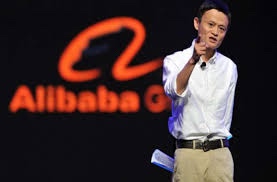
Do the title of this blog makes any sense to you? It may not if you are not a Jack Ma follower! Now don’t ask me who is Jack Ma? He is one of the richest men of the world and the richest Chinese by virtue of being the promoter of Alibaba.

Exhorting his staff, he philosophised that if any company is to make it into big league, its employees must work from 9 am to 9 pm 6 days a week. When the World at large is debating work life balance and pitching for 4 days of working week, Jack Ma’s exhortation to staff to clock in 72 hours every week seems seriously flawed. Several recent studies have concluded that anything above 54 hours a week seriously impedes productivity and total work hours per week must be lesser.

Now addressing his staff at a Group wedding, Jack Ma suggested an antithesis of 996. He said that while 996 was key to professional life, it must be balanced by healthy personal life represented by numerals 669. As per Ma, sex for 6 days, 6 times, duration being the key is the secret to improved personal life!

Assigning numbers to the complex management and personal improvement theories possibly started with famous best seller 01 minute manager. Jack Ma’s 996 and 669 theory seems to be a simplistic solution of these complex issues, which is becoming a fad. Especially coming from a super successful Jack Ma, it cannot be dismissed lightly. But expectedly there have been wide and varied reactions ranging from outright lewd to jingoistic ! As someone saucily mentioned, ” after 996, only a super human will be able to follow 669! I don’t expect Jack Ma to do any further elaboration on this !

Let’s work hard without caring for 996 and enjoy the life sans the fantasy associated with 669!

Mother’s Day

Like festivals and folklore behind festivals as also their traditions are my favourite topics, the dedicated days are another theme that interests me. Of course, the interest is not that of curiosity or to spread the message of unity, harmony that is associated with festivals and their celebrations, but it’s the one filled with cynicism! How can you remember and pay obeisance or attention to your father, lover, teacher and above all your mother only on a designated day?

For us, Indians, mother is god because we pray goddess as mother. East has Durga and Kali, while North has Mata Vaishnodevi. Gujarat has Ma Ambay and Bhavani, while our very own Mumbai is named after Mumba Devi. Shitla temple at Mahim is amongst the oldest temples in the city. Lakshmi is the Goddess of wealth and prosperity, while Saraswati bestows knowledge, wisdom and arts. Jai Santoshi Ma based on miracles by Santoshi Ma competed with Sholay when all other movies were biting the dust. Mount Mary in Mumbai and Velankanni church in the state of Tamil Nadu celebrate miracles around Mother Mary. Who in India does not feel beholden to Mother Teresa or simply Mother, French occultist and an associate of Sri Aurobindo, who made Pondicherry her home?

While we revere all the above, what about our own mothers, who have brought us into this world? A mother makes supreme sacrifice right from carrying the foetus in her tummy for 9 months to breastfeeding the infant to spending sleepless nights tending an unwell or cranky child to worrying about child’s studies, career, marriage to giving her best affection to her child’s children, her grandchildren. Only a mother could be such an epitome of selfless love, affection, patience and persistence. And what children in return do for their parents, especially mothers? Ignore her requirements in pursuance of money, career, ambition, wife, own children, assets creation and world hopping! There are heart rending real life cases of children, especially sons, abandoning old and frail mothers to fend for themselves; more caring and prosperous put them in age old homes.

Our houses have become bigger,

With all spaces filled with utmost luxury,

But our hearts have shrunk,

That’s causing a great deal of misery.

We are busy in winning the rat race,

And have no time for anything else to tell;

We celebrate mother’s existence on Mother’s Day;

Rest of the year she remains only in her shell.

Mothers are irreplaceable for that’s the only relationship that’s selfless, caring about nothing else but the child’s well being and betterment. Her child is Centre to her life for whom she cares 24×7, 365 days. Let’s reciprocate that by talking to her at least once every week rather than needing a Mothers Day to reflect on her existence and well being.

As an aside, the modern Mother’s day began in the United States, at the initiative of Anna Jarvis in the early 20th century. This is not (directly) related to the many traditional celebrations of mothers and motherhood that have existed throughout the world over thousands of years, such as the Greek cult to Cybele, the Roman festival of Hilaria, or the Christian Mothering Sunday celebration (originally a commemoration of Mother Church, not motherhood). However, in some countries, Mother’s Day is still synonymous with these older traditions.

Whatever be it’s genesis or historical significance, let’s make a resolution of making each day a Mother’s Day by at least thinking about her and thanking her for our life and existence.

Happy Mothers Day!

Jaipur- The Pink City

My connection with Jaipur dates back to the year 1970, when I was merely 8 years old, travelling to the city with my parents to attend a social commitment. This was one of the earliest memories of travel, the only earlier being one to Amritsar, to attend the marriage of a cousin. This memory is very hazy, though Jaipur’s memory is comparatively clearer. Memories of visit to hawa mahal and amer fort and lazy stroll through colourful Johari Bazaar still fascinate me.

Next visit was more than good 15 years after the first visit. This was a month long visit to attend training programme and this entailed serious sightseeing , shopping and eating errands with friends. As my then employer was head quartered in Jaipur, between 1985 and 1994, there were umpteen visits and I must admit that I fell in deep love with the city. The comfortable pace of life, clean and green environs, colourful bazaars selling great collectible, varied eating options, forts, palaces and temples having fascinating past and of course, friendly people all made Jaipur a great proposition to an extent that I dreamt of making the city my permanent abode.

Fast forward to 2019. It’s been 25 years since I last lived in Jaipur. My visit to Jaipur since 1994 to date has been rare. Therefore, I was naturally excited when an official engagement landed me in Jaipur a couple of days ago. It was a short visit and entailed an official engagement too, still I didn’t forget to take a quick detour of the city. Iconic MI Road is still there, but it’s one way and yet traffic is extremely heavy. Old joints such as Niros, Jal Mahal, Lassiwala, Indian Coffee House still adorn MI Road, but there are newer , glitzier and swankier restaurants paling the old icons. Chhoti Chaupad, Badi Chaupad, Johari Bazar – all look haggard being dug up for underground metro that’s under construction. LMB and Rawat Mishthan Bhandar are still there, but I doubt whether the new generation will support these traditional places or whether these will fold up like other iconic places in Delhi and Mumbai. I am told another icon Raj Mandir no longer inspires awe that it used to in its glorious past.

Of course, the haunting tune of ” Kesariya Balma padharo maare des” still evokes the nostalgia of the past. The new Jaipur will have metro, malls and more cars and people, but will the Pink City maintain its traditional attraction is anyone’s guess! Having seen and experienced the best of Jaipur in the prime of my life, I wish the city, with which I seem to have a cosmic connection, all the best!

#Men Too

Rape charges against TV actor Karan Oberoi by his long time partner has once again rekindled the memories of public and media to #Me Too movement. However, there’s one change this time. A large number of members of artist fraternity, friends and others knowing Karan have openly come out in his support, The high point of this seemingly anti Me Too campaign is maverick Pooja Bedi’s assertion that men too have their reputations to protect and this blog owes its title to Pooja Bedi using this term Men Too as a movement as an antithesis of Me Too.

When two legally adult, matured, educated and intelligent people meet, the choice is completely with them as to the direction and extent they want their relationship to take. The relationship can lead to financial, physical and emotional gratification, with or without underlying commitment or understanding. Sometimes certain things can happen unexpectedly at the spur of the moment. But after years of togetherness and relationship, calling the same a rape or suffering should the things go sour subsequently is incomprehensible.

Is verbal contract a bona fide contract? Can it be termed as contract made in a free state of mind without any pressure or coercion? All this is for law to see and I am sure more often than not impartial judicial system is able to dispense justice , but are the matters of heart and conscious required to be judged by legal standards? The bigger question is should the promises of love, care and lifelong camaraderie be treated like legal contracts? My only worry is that such instances may dilute the gravity of the sin that a rapist perpetrates on an innocent victim for people at large may start treating all such cases as an extension of #Me Too. Second of course is the new perspective by Pooja Bedi that says # Men Too! After all, men too suffer when such things raise their ugly head years after the incident.

Me Too and Men Too between them should not lead to public apathy of reprehensible crime that rape is!

Advertisement- Fact or Fiction

PIA

@Official_PIA

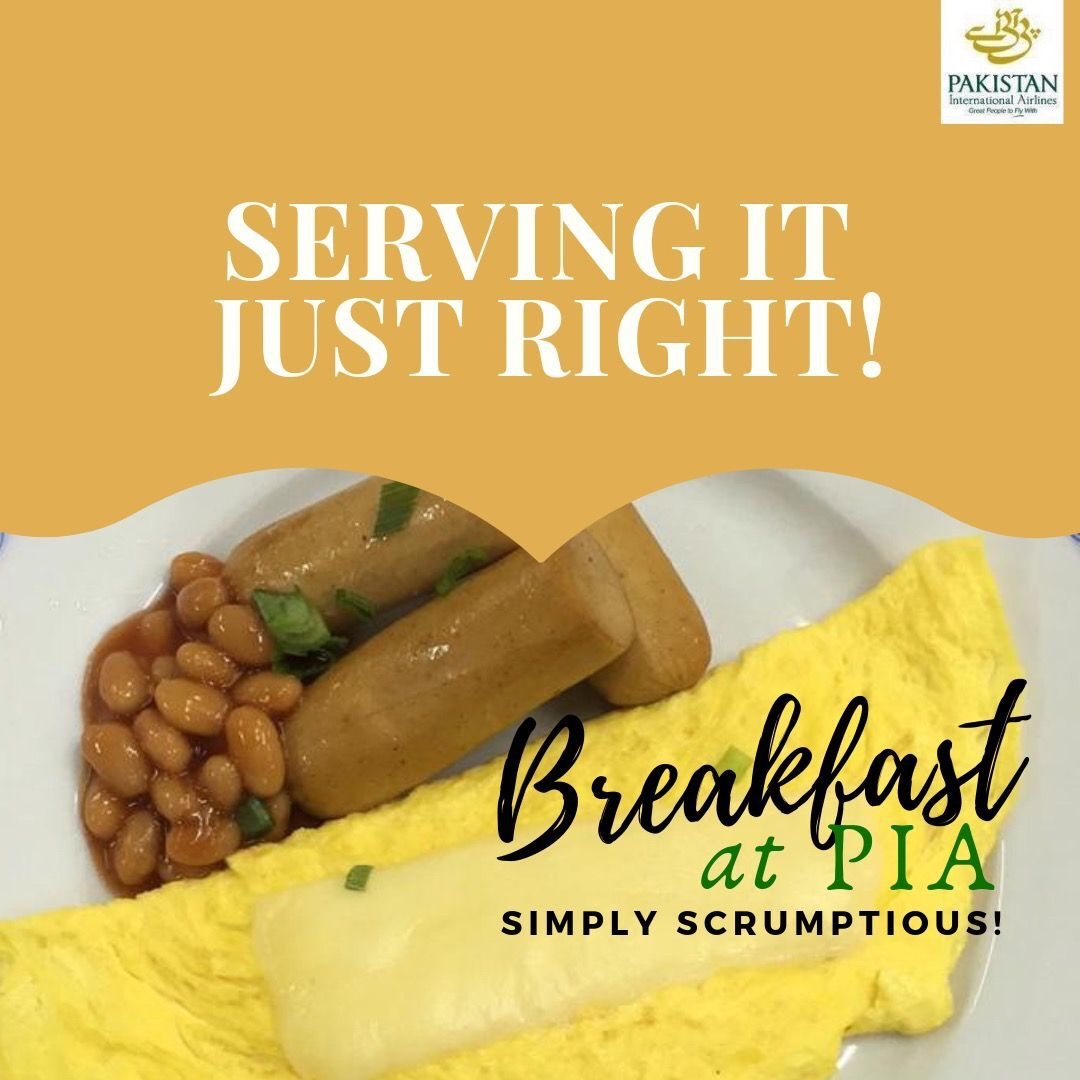
Just when you start missing it, we serve you a taste of home! A dash of salt and little bit of pepper, we tantalize your taste buds with our delicious meal to welcome the glorious morning!

Advertisements can be anything – classic, funny, entertaining, meaningful and memorable. They can evoke extreme reactions- fear, bliss, envy and anger. Some advertisements (and their campaigns) acquire cult status (our very own Amul). Some mascots have also endeared themselves to us and have demonstrated remarkable longevity, more prominent being Amul girl and Air India Maharaja.

In the above background, reaction of the Pakistanis to the recent ad of PIA is understandable. The above ad has been panned by Pakistani public and the reaction ranges from extreme sarcasm to anger against the national carrier for advertising “taste of home” by depicting the picture of baked beans, sausages and cheese omelette, all typically European/American food items! I have heard that following the adverse reactions to its ad, PIA has since withdrawn the ad.

But why such adverse reaction to relatively harmless ad that at least does not hurt the sentiments of any community? For once, the cuisine aboard a flight is meant for elite and upper crust business class passengers, who though mainly of the same origin as that of the airline (read Pakistani in this case), are a creed apart. For ordinary folks, it’s mostly a pre packed ordinary stuff, which is hard to consume and that too in full cost carriers, low cost only offering food at a price! Look at our own elite. Who is eating traditional breakfast items – stuffed paranthas, puris and halwa? Luckily some of the Indian cuisines are relatively healthier (read mainly South Indian cuisine) and idli, poha and sabudana are coming to rescue of some of us? But most of the elitist would normally eat muesli, salad greens, baked beans, a piece of grilled chicken or fish, eggs minus the yolk, juice for their breakfasts! Ditto other meals. Airlines are only advertising what the elite passengers require and demand and what precisely are they eating at home! We, generally train and bus and at best cattle class travellers, can only pan the elitist ad and claim that sausages and baked beans are not our food and we eat paranthas, curries and puris!

Are the companies not advertising the correct proposition or is the public at large reacting incorrectly is a question that will haunt the creators of advertisement content!

Living on the edge

A person died while doing stunts on a giant wheel ride. He opened the seat lock, stood up and started doing stunts. Other people on the ride and people watching him from down below requested him to sit down and affix the seat lock, but he felt thrilled. He fell down as his seat on the giant wheel reached the highest point, broke his skull and died enroute hospital. We see similar deaths daily relating to the youngsters performing dangerous stunts on the fast moving Mumbai local trains. Mumbai, home to the Bollywood also witnesses death and serious injuries to the stuntmen performing dangerous stunts as duplicates for our favourite stars.

What’s the feeling in humans that provokes them to do dangerous stunts, fully knowing that some of these could prove fatal? While it’s understandable for film stuntmen, for whom it’s a source of livelihood, commoners doing it just for a kick is slightly incomprehensible. I distinctly remember the stunts such as fireman (a man diving into a water well several feet below from a podium after sprinkling kerosene and lighting fire on his body) as well as death of well ( a wooden inverted dome with spectators from the top watching a stuntman driving motorcycle on the inner wall of the dome) that we witnessed in our childhood during Diwali/Dussehra/New Year fairs. Of course, these were professionals doing these risky acts for their livelihood. But it was scary to say the least.

International adventure tourism is a new fad, with thrill seekers going to distant destinations for sports like bungee jumping, sky diving, scuba diving etc. Disneyland became an iconic destination for it satisfied this animalistic urge of humans to seek thrills. Now we have these adventure parks almost everywhere in the world.

When the mankind is able to satisfy all its day to day needs of hunger, shelter, sex, ambition and filial love, it goes out seeking thrills that give a different kick. Whether this is representative of bravery or mere overcoming of fears it’s not very clear but what’s apparent is that once the life becomes comfortable, people seek out living on the edge. Those who struggle to meet two ends meet, they aspire for a life of comfort. To sum up, people leading comfortable lives seek thrills through risky adventures while those in penury and for whom meeting the two ends meet itself is an adventure, seek basic comforts.

Such is the irony of Human nature that’s hard to fathom.

Me Too of another kind

Memories are short lived and “Me Too” movement that rocked the nation a few months ago, seems to have been laid to rest after taking its toll on a few stalwarts, the more prominent being Nana Patekar, Alok Nath, MJ Akbar, Rajkumar Hirani, Anu Malik, Suhel Seth etc. It, in fact, acquired such monumental proportions that I was also compelled to write a couple of blogs. The social media worked overtime when the movement was at its peak.

As aforesaid, all seemed to have quietened till I read about it again in newspapers. It assumed special significance as it came from the mouth of none less than PM Modi. Reacting to a statement by former PM Manmohan Singh that surgical strikes used to happen during Congress Government’s reign also, PM Modi reacted that Congress seemed to be suffering from Me Too syndrome, equating it to the popular Me Too movement discussed above. The Me Too movement spread like a wild fire, indicating that the suffering was experienced by quite a large number of women and was a social malaise. On the contrary, if Me Too of surgical strikes spreads to different Governments, from Nehru to Shastri to Indira to Morarji to Chandrashekhar to Charan Singh to Gujral to Rajiv to Narasimha to Atal to Deve Gowda also apart from Manmohan and Modi, this is no malaise but representative of our military might that can strike at the enemy anywhere anytime.

Let’s have more Me Too movements of the second kind and none of the first kind, which was a matter of shame and concern.

Nothing comes free

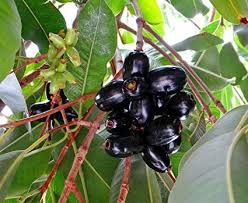
This is Jamun season. Jamun is a purplish black fruit, small in size having flesh and a stone inside. The fruit in its full ripeness is heavenly and sweet, though when raw it can be sour and bitter. The fruit as also it’s stone are known to have medicinal value.

You will wonder what prompts me to write, of all things, about Jamun. Read an interesting small write up in today’s newspaper penned by evergreen Jug Suraiya, where he laments about Jamun being sold at an exorbitant price of Rs.200 a Kg., something that was available to him for free during his childhood days spent in Kolkata, where he and his friends could pluck the fruit straight from the trees that lined Kolkata avenues, of course, free of any cost whatsoever! The writer further complains about freebies such as drinking water and clean air, which were available in abundance for free in his childhood, but which now cost a fortune (some of the mineral water brands come quite expensive; to escape themselves from polluted air, people are using expensive masks and equipment that are capable of purifying air inside homes).

Actually, in one of my earlier blogs, I had preached the futility of lamenting about the past and to live in present. However, coming across articles such as the one I have made a mention of above, one cannot resist indulging in a bit of nostalgia. Some of the instances of freebies that we were privileged to have in the times of yore and which I can readily collect are:

(1) Free chillies and coriander with every purchase of vegetable. Some vendors still oblige but only with larger purchases.

(2) Free pan for children accompanying the elders. Every time, I went with my father, uncles or other elders to their post dinner walks for a pan or smoke, I would be the beneficiary of a small sweet pan, especially rolled for me, more importantly free of cost.

(3) Accompanying elders to any shop would generally fetch me a free toffee or chocolate, though bigger purchases such as saris or gold jewellery would mean free coke and cookies.

It’s difficult to explain whether this nostalgia is about freebies or the freedom associated with childhood. I think the free air, water and Jamun that Jug Suraiya mentioned was more to do with the memories of his childhood than the current state of affairs associated with the above elements . Actually, more than anything it was about the free mind, which in today’s world is not quite possible being occupied with all the worries and concerns about studies, careers, income, luxuries, promotions, assets, cars, social status, IPL, politics etc. if mind is preoccupied and busy, nothing comes free!

He, She or It

Came across an interesting piece of article on the gendered nouns. The article states that English as a language has been quite progressive and in more and more cases, the use of gender neutral “it” is replacing he or she. The article specifically mentions about ships and boats that were earlier referred to with feminine pronoun “she”, before it was substituted with “it” in English. However, in several languages like French and Spanish, the trend of assigning masculine or feminine genders to nouns is quite prevalent.

The above is an interesting piece as it to some extent attends to my curiosity of the change in the use of gender specific pronouns to gender neutral “it” lately. In my school and college days, countries, maritime transport, cars etc. were generally preceded with feminine pronoun, while several others used to be represented by masculine pronouns. Further living beings such as dog, Tom cat, cock , tiger were he and their female counterparts viz. bitch, pussy cat, hen and tigress were she unlike these days’ common usage of “it” obviating the need for determining the sex of the living beings!

Interestingly, while English has progressively evolved to using gender neutral pronoun and several other languages are making an attempt, our own Hindi does not provide this option. In Hindi the verb defining action of the noun is picked up depending on the noun’s gender. While in English we say, ” Pencil writes well. It lasts long”, in Hindi we will have to say, “Pencil accha likhti hai. Woh bahut chalti hai.” By using feminine verb forms, we make pencil a feminine noun. This, of course, is a matter of great inconvenience to non- Hindi speaking person, who constantly struggles with the task of assigning right gender to the noun. He or she is at loss when we laugh at him or her when he or she says, ” sabzi accha hai instead of acchi, paani thandi hai instead of thanda” etc and I can fill this blog up with many such instances, where non- Hindi speakers struggle with the task of using right gender for nouns representing things of daily use.

However, this dilemma is not restricted to non- Hindi speakers. We, so called proficient in Hindi, commonly use predefined genders in our daily conversations. A koyal (Cuckoo) is always surili (musically harmonious), saanp (snake) is zahreela (poisonous), makhi (fly) tang karti hai (nuisance), while a macchar (mosquito) kaatta hai(bites) etc, irrespective of whether koyal, saanp, macchar or makhi is he or she!

While I call upon linguists to work on the options to make Hindi simpler, we can never do away with this fully. Our beloved country will always remain Bharat Mata, beloved river Ganges, Ganga Maiya as also personification of the great Himalayas, Sun, Moon, Planets etc, which is inherent to our very culture.