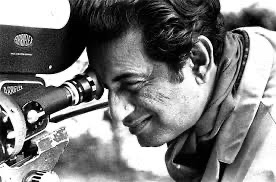
Satyajit Ray – The master filmmaker

During a visit to a friend’s house, I saw a book on Satyajit Ray lying on his bookshelf. I couldn’t resist and borrowed the book as I had been contemplating knowing more about arguably the India’s best ever filmmaker.

The book was rather simple. Part 1 discussed all his 38 odd films and documentaries that the prolific maestro made over his film career spanning about four decades. Part 2 had interviews with all those who had the good fortune of working with the master and were alive on the date to reminisce about the great filmmaker.

It was most interesting to know how Ray chose his stories, locations, actors, technicians, music, locations etc, shoestring budget at his disposal and his deep commitment to realism.

My readers may recall that I read all the original James Bond books by Ian Fleming, watched Bond movies based thereon and arrived at certain very interesting conclusions.

I decided to do an encore with Ray’s work too. The problem I faced was that his movies were either not easily available, or had bad prints or didn’t have English subtitles. Notwithstanding these constraints, I watched seven movies – Jana Aranya, Shakha Proshakha, Seemabadha, Kapurush, Mahanagar, Ganashatru and Charulata.

It doesn’t befit me to pass any judgment on the master’s work, which is acknowledged worldwide as classic. The movies shook me to the core with their stark realism, problems of rural and urban India and human relationships. And while we outside of Bengal know Bengali actors such as Uttam Kumar, Sharmila Tagore, Suchitra Sen, Aparna Sen and Biswajit, Ray’s go to actors were Soumitra Chatterjee and Madhabi Mukherjee. It was a treat to watch these actors getting into the skin of the character that the situation demanded. It was no surprise that why these and several others (Haradhan Bandopadhyay, Deepankar Dey, Mamta Shankar, Utpal Dutt) were Ray’s go to actors.

Much before the so called “parallel cinema” or neo realist films started doing rounds in Hindi, Ray had already mastered the art of showing the best stories in the most realistic manner and enacted by some of the finest actors.

I salute the great master and body of his work, which must be preserved and popularised to reach out to more and more first time viewers of his classic work like me. Unless, I watched his movies, I didn’t realise what great stuff I had missed out in life.

25 and counting

I always thought that if Djokovic had not faced Alcaraz in Wimbledon Finals, he would have got his 24th grandslam title there itself and be striving for 25th at US Open thereby completing his silver of grandslam titles. But this feat had to wait for few months and happen at US open.

The things went right for the great Djokovic from the start itself. He got 2nd seeding to Alcaraz’s 1st, ensuring that the two would meet, if at all, only in the finals. While the things went on smoothly for the seeds, with the top 3 seeds reaching semis, only Ben Shelton being the dark horse, Djokovic’s chances became considerably bright as Alcaraz-Medvedev match was expected to be a tough encounter, tiring both the players for facing the great Joker in the finals. Djokovic had a relatively easier win over Shelton and Medvedev played game of his life to overcome Alcaraz. Djokovic played the sublime tennis to defeat Medvedev to claim the record 24th grandslam, a feat that brought him at par with Margaret Court and ahead of all his contemporaries, making him the undisputed GOAT ( Greatest of all time).

At 36, Djokovic only seems to be improving. Good service followed by volley at the net is the new weapon in his armoury making him even more lethal. His immediate rival, Alcaraz is already contemplating seeking help for temperament for big games. What a year this has been for the GOAT! Appearing in all four grandslam finals and winning three of them ( against Tsitsipas, Ruud and Medvedev), is a great feat in Modern day tennis. Will Djokovic be fit and motivated enough to have a calendar slam in 2024 is anybody’s guess, but that’s unrelated to his confirmed GOAT status.

Lucky are we to be witnessing great tennis rivalry amongst Federer, Nadal and Djokovic , with Djokovic ultimately outrunning others to emerge a GOAT.

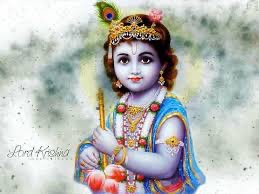
Krishna – The supreme godhead

On the occasion of Krishna Janmashtami, our building organised a programme that included a discourse by HG Ram Rup Prabhu from ISKCON, Juhu. Actually, I have heard Ram Prabhu on several occasions thanks to devout ISKCON devotee couple Vidhi and Sushil, who stay in our building and who used to regularly organise kirtan and katha by Ram Prabhu, a sequence that broke post Covid epidemic. I have always felt more at peace after listening to his explanation of the teachings of Krishna as interpreted by A C Bhaktivedanta Swami Prabhupada.

Today Ram Prabhu narrated a very interesting story. There was a king who was so deeply entrenched into committing sins that he notoriously came to be known as Paapsingh. Once Narad Muni wanted to have a discussion, but he was avoiding the wandering saint. Narad Muni assured him that he’d give him no lengthy discourse but would tell him only one thing to ask Lord Yama during his final journey as to the merits of the company of a pure and godly soul. When Yama came to fetch Paapsingh after his death, he posed the same question to Lord Yama. Yama felt confounded, admitting that he didn’t know the answer, but would seek guidance from Lord Brahma. Two of them went to Lord Brahma, who also expressed his inability to answer the posed question, suggesting that they should go to Lord Shankar. As three of them went to Lord Shankar and sought enlightenment from him, he too expressed perplexity, proposing that they should go to Lord Vishnu. As four of them went to Vaikunth, Lord Vishnu smiled and told Paapsingh, “ Can’t yo see that company of good soul (Yama) brought you right into Vaikunth though you deserved Narak ( hell) and that too in the August company of Lord Brahma and Lord Shankar. A simple story highlighting the need of keeping good company made deep impression on the minds of people listening to the discourse.

An explanation of why Lord Krishna’s birth was very special and different from how ordinary mortals are born infused the spirit of Krishna Leela into the entire gathering.

Happy Janmashtami to each one of you.

Achieving goals

Came across a beautiful thought this morning that read:

“What I get in achieving my goal is insignificant to what I become in achieving my goal”.

We all aspire for career growth, personal growth, prosperity, fame etc. As we gradually progress in life, we do achieve the most of our goals, if not all through sheer hard work and meticulous career planning. But isn’t it true that our focus is mainly on material gains that we get by achieving this goals? Every promotion  is celebrated in anticipation of the incremental financial and positional gains that we get as an outcome. But the truth is that along with positional elevation and financial gains, we also get higher responsibility and an opportunity to contribute more – to the organisational growth, development of team members, taking care of the career and growth aspirations of the team members, mentoring the bright youngsters, disseminating knowledge acquired over a period of time with others etc. Similarly, while sense of personal satisfaction, enhancement in social status, improvement in living standard are a few of the direct benefits of achieving personal goals, we could use this opportunity by undertaking some philanthropic activity like teaching street kids, sponsoring an orphan, donations to our alma maters  or institutions like Tata Cancer Hospital, undertaking a tree plantation or beach cleaning drives etc. 

Achievement of our goals gets us many things, but the important point is whether it also leads to any transformation or change to our personal and professional selves to become a better human and a citizen? 

These days all HR and management workshops exhort the participants about larger purpose, which the aforementioned thought enshrines beautifully in few words.

#careergrowth #success #personaldevelopment

Lunar South Pole – Bright spot for India in the Dark zone

ISRO has done it and Chandrayan 3’s lander Vikram made a soft landing on the moon’s South Pole, as planned and we are already witnessing some rare glimpses of this dark, unexplored part of the moon much to the world’s awe and delight.

While there’s so much on all forms of media regarding Chandrayan 3’s journey , it’s ultimate soft landing and relating technical details, I thought the best tribute that I can pay to our ISRO scientists will be by composing a few lines in their honour and in the honour of their mission. It reads:

When Armstrong landed on the moon, it was

One small step for man, one giant leap for mankind.” 

And the entire world celebrated the event

For it was one bright spot of its kind.

And the quest to know more about moon

Continues in our country too that adores “Chandamama”

 To see the unexplored terrains of

Children’s favourite uncle nee “ Mama”

Chandrayan 2 almost reached there but crashed

At the last moment just before reaching home

But Chandrayan 3 has landed in Lunar South Pole

Creating a bright spot by landing in dark zone

Congratulations to our scientists and entire countrymen on this defining moment for the country’s space quest.

Sales and service

From the beginning we were told that banking was part of the service sector. And it is also true that when we joined bank in early and mid 80s, service standards were pathetic to say the least. Passbooks would seldom get updated across the counter and simple banking transactions like withdrawal and deposit would take hours. However, with increase in customer awareness, proliferation of alternate banking channels and above all fierce competition, especially from new generation private sector banks, the customer service issues are now largely resolved and customer, in fact, is spoilt for choices

This has led to problem of a different sort. With customers using ATM, net banking and mobile app for routine transactions, they are not required to visit bank’s branch too often. However, for more unusual services such as address change, signatory change, change in mode of operation, re-KYC etc, visit to branch is usually not a fulfilling experience as most of these activities are moved to back offices and branches are not really aware of the requirements and procedures. When back offices find documents inadequate, there’s to and fro causing customer disenchantment.

Branches in fact have become more of sales outlets than service units. The branch staff carries target for selling bank’s own products as also third party products such as mutual funds and insurance. Transition to sales focus from service focus has, in a way, taken the customers back to pre technology and pre competition era of deficient service levels. But, as aforesaid, a customer being spoilt for choices changes his bank, leading to high customer attrition.

In a service industry, service must be the prime focus and cross selling a by product. A satisfied customer will shift all his business to a bank where he gets good service and in the process bank can meet its sale targets.

77th Independence Day

I am no Hindi Pandit, and whatever I am writing here is purely my interpretation.

15th August is our Independence Day, though in Hindi we call it Swadhinta Divas as also Swatantrata Divas. In English swadhinta is liberty and Swatantrata is freedom.

To my mind, while swatantrata gives us free hand or freedom to do anything, swadhinta indicates controlled freedom – not anyone else’s control but our self control ( swa adhin). It emphasises that freedom earned by us after a prolonged struggle is to be enjoyed but with some control. The way we go berserk on social media, during road rage, when someone professes a contrarian view et al are all instances of uncontrolled freedom, which seems to be posing a great risk to our social fabric.

Let’s cherish every moment with a free spirit, but awakened conscience so that independence earned due to sacrifices of our freedom fighters is preserved till eternity and we use it for the betterment of humanity.

Swadhinta is Liberty

Swatantrata is freedom

We enjoy both

Within India’s fiefdom.

But all rights come with obligations

And freedom with some controls

These controls vest with us only

And are therefore called self controls!

Happy Independence Day to all my readers!

Differentiating Factors

When large number of companies start selling similar products, it becomes a matter of great fascination as to why people choose the product of Company A rather than companies B or C?

Of course, this is not a new topic and apart from third party analysts and opinion makers, companies themselves elaborately study their own strengths and weaknesses vis-a-vis their rivals and then take corrective steps to outshine the competition. The corrective steps could be anything – making packaging more attractive, relaunching the product, introducing its new variants or backing the product up with marketing blitzkrieg!

Now the question arises is what about banks? If we look at the product suite of all the large banks, it will look like a replica of each other with minor variations here and there! Almost all such banks have all the channels of delivery – branch network, self service kiosks, feet on street, mobile app, internet banking, UPI . Schedule of charges and freebies would not look much dissimilar, but for one not very large bank that has made everything free in its zeal to garner larger pie of market share. Earlier new generation private sector banks made a deep impact and weaned significant share from PSBs by extending good customer service. But with self service banking being preferred over a visit to the nearest branch, even service does not seem to be a differentiating factor. What then could be the factors that tilt a customer’s loyalty towards a particular bank.

To my mind, where relationship is given greater importance than sales, courtesy and helpfulness is ingrained in the staff as organisation culture and staff is happy, enthusiastic and pleasantly disposed, such organisations will leave behind those that are solely depending on aggression. Some aggression is required to give impetus to an organisation’s juggernaut to grow faster than market, but while this juggernaut is programmed at the top, it’s execution is at the field level and their inclusion into the organisation’s growth plan is absolutely must.

Indianness

I generally stay away from politics, as I find the topic too complex and protagonists very biased and intolerant. Therefore, I have avoided writing on the recent unfortunate incidents of violence in parts of the country; unfortunate, because I always thought that in India of today, only growth and development and nothing else mattered. However, I feel constrained to refer back to something we have all grown up hearing:

ॐ  सर्वे भवन्तु सुखिनः
सर्वे सन्तु निरामयाः ।
सर्वे भद्राणि पश्यन्तु
मा कश्चिद्दुःखभाग्भवेत् ।
ॐ शान्तिः शान्तिः शान्तिः ॥

1: Om, May All be Happy,
2: May All be Free from Illness.
3: May All See what is Auspicious,
4: May no one Suffer.
5: Om Peace, Peace, Peace.

Vasudhaiva Kutumbakam is a Sanskrit phrase found in Hindu texts such as the Maha Upanishad, which means “The World Is One Family”. Vedic tradition mentions “Vasudhaiva Kutumbakam” meaning all living beings on the earth are a family.

The above two are a shloka and a phrase that in nutshell embody our ethos. We wish for health, happiness, prosperity and peace for everyone and the word everyone is without any discrimination as highlighted in the phrase Vasudhaiva Kutumbakam, which asserts that all living beings on earth are one family. 

If the above are the guiding principles for us than how come we are seeing ever increasing discrimination, division and intolerance based on gender,  caste, religion, region, ethnicity, especially of late in this country. If the entire world family, then to begin with, let’s embrace all our country folks as one family, before even thinking of embracing the entire world or worldly creatures! 

India is making unparalleled progress in the fields of science, technology, space, infrastructure, medicine, defence and is already the fifth largest economy. But this growth has to be inclusive and should not be hampered by communal, ethnic or regional discords and atrocities on weaker sections of societies, including women. Our scriptures, religion, ethos- whatever you may call it, preaches and advocates peace, inclusivity, tolerance and above all compassion. That’s Indianness is all about – I would not use Hinduism because all other religions also advocate the same principles and inclusivity can only happen if everyone is willing to be included! 

This country is for all Indians. Our constitution provides equal opportunities to each one. It’s high time we get over the aforementioned narrow considerations and imbibe Indianness – an all encompassing spirit. Let peace prevail everywhere from Manipur to Haryana to West Bengal to Rajasthan. Violence under no pretext can be justified!

Violence is retrograde

It has no place in civil society;

The end result is devastating

Only poor and downtrodden suffer the atrocity.


Irrespective of place where it happens

Or the actors involved in its execution;

Ultimately it jams the wheels of progress

And pulls back a marching nation.


We can all coexist

In the spirit of Vasudhaiva Kutumbakam

And there shall be peace everywhere

Removing from our midsts all the bunkum!

Dinosaurs go extinct

As top managers, we give directions from the top (it’s called top down approach as against the more democratic – bottoms up, both having their own merits and demerits) and that, in a manner of speaking, could be the right way to manage by looking at the macro issues rather than undertaking micro management. But, not many top managers, especially in the modern times, are going right up to the top from grassroots through organic time bound growth. Bosses who grow ftom grassroots to the top have usually handled, almost all, if not all the activities that happen in the organisation and are well versed with the challenges posed by each of such activities. For example, such a manager by virtue of his hands on experience on the shop floor would be well aware of the efforts involved and likely snags. Ditto the challenges in departments such as packaging, sales, recovery etc.

But managers of today are young, highly and pertinently qualified, very ambitious, in a hurry and open to accepting all the challenges. Obviously, they want to create deep impression of their contribution in a short span of time and to this end, they can go to any extent, including arriving at certain decisions that may not actually reflect true state of affairs.

The provocation for the above arose from a video I saw on social media, where a very prominent socialite and human rights activist, spoke about our passion or rather obsession for everything big – big plans, big changes ( transformation, the new byword for big change), big numbers- and in the process, we forget scale of what smallness means multiplied many times! There are workers, labourers, messengers, accountants, assistants, line managers, sitting on shop floor, in administrative offices, back offices, head offices etc forming the lifeline of the organisation, and if the management is not holistic, but focused only on balance sheet parameters and investors’ reaction than the effect of smallness multiplied many times can be deemed to be getting ignored. For all such managers and organisations, it will be good to remember the catchline or byword or mool mantra ( the basic tenet), as one may please to call it – Dinosaurs go extinct; small contributions multiplied many times over make the real big!